

ORIGINAL ARTICLE
In vitro Evaluation of Antagonistic Microorganisms and Botanical Extract against Fusarium verticillioides Causing Banana Fruit Rot in Iran
1
Engineering Department, Velayat University, Iranshahr, Sistan and Baluchestan, Iran, Moradi, 9917638733, Iranshahr, Iran
2
Engineering Department, Velayat University, Moradi, 9917638733, Iranshahr, Iran
3
Plant Protection Department, Iranian Research Institute of Plant Protection, Lorestan Agricultural and Natural Resources Research Center, keshavarz, 6815865386, Khorramabad, Iran
A - Research concept and design; B - Collection and/or assembly of data; C - Data analysis and interpretation; D - Writing the article; E - Critical revision of the article; F - Final approval of article
Submission date: 2025-08-11
Acceptance date: 2025-12-03
Online publication date: 2025-12-15
Corresponding author
Hossein Piri
Engineering Department, Velayat University, Iranshahr, Sistan and Baluchestan, Iran, Moradi, 9917638733, Iranshahr, Iran
Engineering Department, Velayat University, Iranshahr, Sistan and Baluchestan, Iran, Moradi, 9917638733, Iranshahr, Iran
HIGHLIGHTS
- Banana
- Fusarium verticillioides
- Azadirachta indica
- bacterial and yeast antagonists
KEYWORDS
TOPICS
ABSTRACT
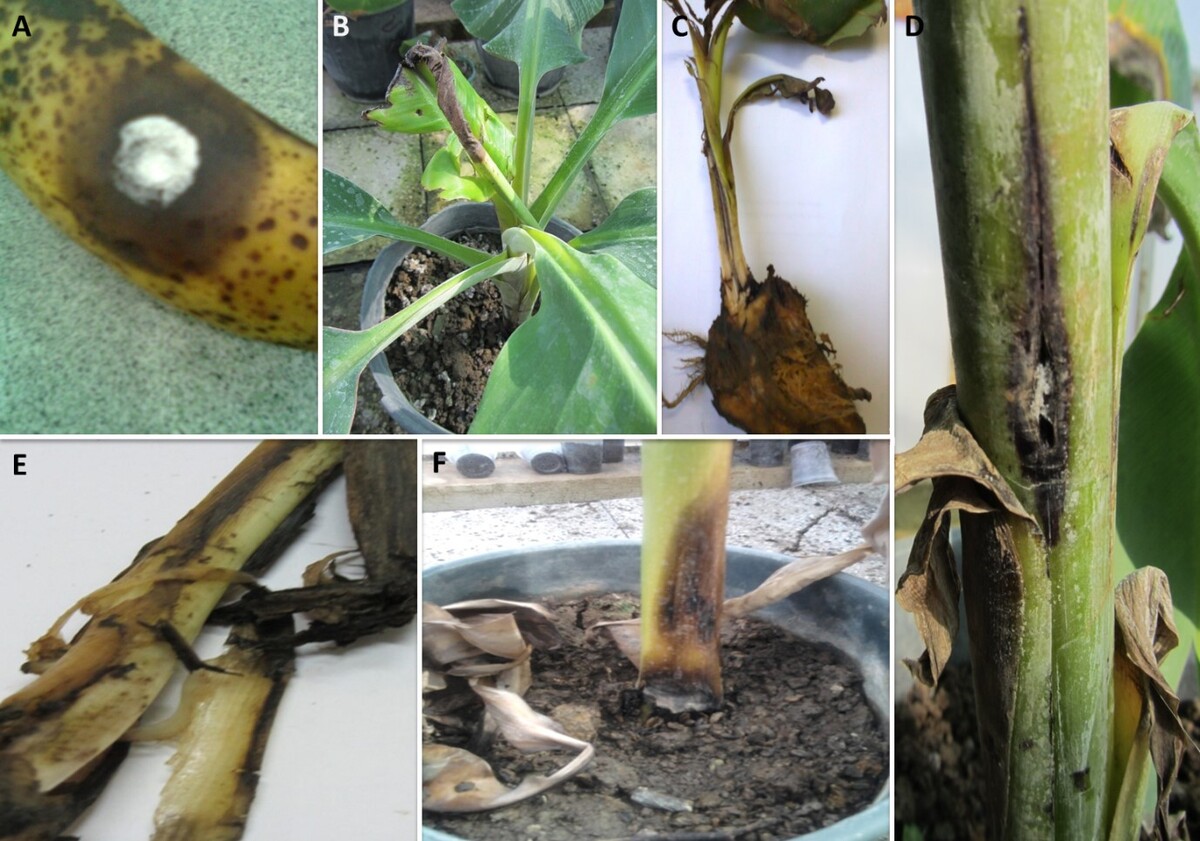
Banana fruit rot by Fusarium verticillioides is one of the most important diseases of banana in Iran. In 2021-2022 this species was identified by both morphological and molecular methods in Iran. Also, its phylogenetic relationship with the reference species in the GenBank was investigated. Pathogenicity tests revealed that all isolates induced symptoms of banana fruit rot disease that were consistent with those observed in the field. In the second step of this study, control of F. verticillioides was evaluated in vitro and in vivo. Currently, the current trend is shifting from chemical pesticides toward safer methods. Antagonist microorganisms as biocontrol agents are useful substitutes. Some bacteria and fungi have been found to have inhibitory effects on F. verticillioides. This research examined the effects of bacterial and yeast antagonist isolates, Neem (Azadirachta indica) extract and a chemical fungicide (Thiabendazole) on the mycelial growth of F. verticillioides. The results showed that two bacterial isolates and two isolates of yeasts inhibited the pathogen growth. The methanol leaf extract of Neem, at a 4000 ppm concentration, showed the most antifungal activity. Integration of four bacterial and yeast antagonists with Thiabendazole showed the best activity at a 600 ppm concentration of Thiabendazole.
CONFLICT OF INTEREST
The authors have declared that no conflict of interests exist.
Share
RELATED ARTICLE
| eISSN: | 1899-007X |
| ISSN: | 1427-4345 |

We process personal data collected when visiting the website. The function of obtaining information about users and their behavior is carried out by voluntarily entered information in forms and saving cookies in end devices. Data, including cookies, are used to provide services, improve the user experience and to analyze the traffic in accordance with the Privacy policy. Data are also collected and processed by Google Analytics tool (more).
You can change cookies settings in your browser. Restricted use of cookies in the browser configuration may affect some functionalities of the website.
You can change cookies settings in your browser. Restricted use of cookies in the browser configuration may affect some functionalities of the website.
