
ORIGINAL ARTICLE
Integrated genomic, mechanistic, and transcriptomic analysis of new Bacillus thuringiensis strains for enhanced biocontrol of agricultural pests

1
Qufu Normal University, Faculty of Life Sciences, 57 West Road Jingxuan, 273165, Qufu, China
2
National University of Life and Environmental Sciences of Ukraine, Department of phytopathology named after V.F. Peresypkin, 15 Heroiv Oborony, 03041, Kyiv, Ukraine
3
National University of Life and Environmental Sciences of Ukraine, Faculty of Agrobiology, 15 Heroiv Oborony, 03041, Kyiv, Ukraine
A - Research concept and design; B - Collection and/or assembly of data; C - Data analysis and interpretation; D - Writing the article; E - Critical revision of the article; F - Final approval of article
Submission date: 2025-10-14
Acceptance date: 2025-12-09
Online publication date: 2025-12-19
Corresponding author
Patyka Nikolai Vladimirivich
Qufu Normal University, Faculty of Life Sciences, 57 West Road Jingxuan, 273165, Qufu, China
Qufu Normal University, Faculty of Life Sciences, 57 West Road Jingxuan, 273165, Qufu, China
HIGHLIGHTS
- Bacillus thuringiensis
- Insecticidal genes
- Synergism
- Pest management
KEYWORDS
TOPICS
ABSTRACT
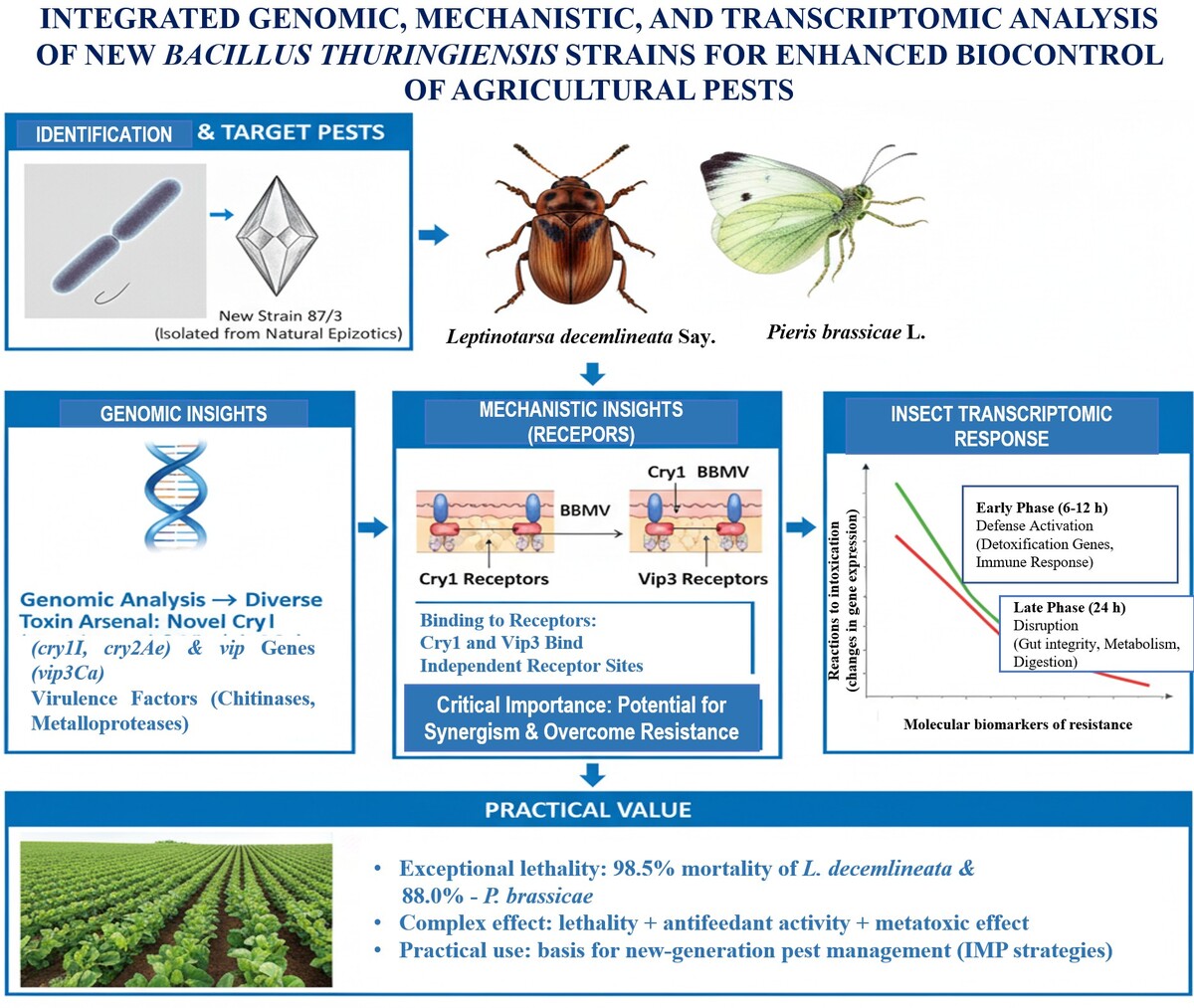
Global agricultural systems face increasing challenges due to climate change and the evolution of pesticide-resistant pest strains. Bacillus thuringiensis (Bt) remains a key bioinsecticide, but new strains with enhanced efficacy are urgently needed. This study aimed to identify and comprehensively characterize a new Bt strain, 87/3, and evaluate its entomocidal and antifeedant properties against the Colorado potato beetle (Leptinotarsa decemlineata) and the large cabbage white butterfly (Pieris brassicae). Strain 87/3 demonstrated exceptional entomocidal action, with up to 98.5% mortality of L. decemlineata, and 87.9% against P. brassicae. Genomic analysis revealed a diverse array of insecticidal genes, including new Cry and Vip types. Receptor binding assays confirmed that purified toxins from strain 87/3 have high-affinity binding to the midgut membranes, with different toxin classes binding to different receptors. Transcriptomic analysis showed significant changes in gene expression in the pests after exposure to strain 87/3. This included early activation of detoxification and immune response genes, followed by later disruptions in genes associated with gut integrity and metabolism. These results confirm the exceptional potential of B. thuringiensis, strain 87/3, as a basis for new-generation bioinsecticides and provide molecular data for developing effective resistance management strategies.
CONFLICT OF INTEREST
The authors have declared that no conflict of interests exist.
| eISSN: | 1899-007X |
| ISSN: | 1427-4345 |

We process personal data collected when visiting the website. The function of obtaining information about users and their behavior is carried out by voluntarily entered information in forms and saving cookies in end devices. Data, including cookies, are used to provide services, improve the user experience and to analyze the traffic in accordance with the Privacy policy. Data are also collected and processed by Google Analytics tool (more).
You can change cookies settings in your browser. Restricted use of cookies in the browser configuration may affect some functionalities of the website.
You can change cookies settings in your browser. Restricted use of cookies in the browser configuration may affect some functionalities of the website.