


ORIGINAL ARTICLE
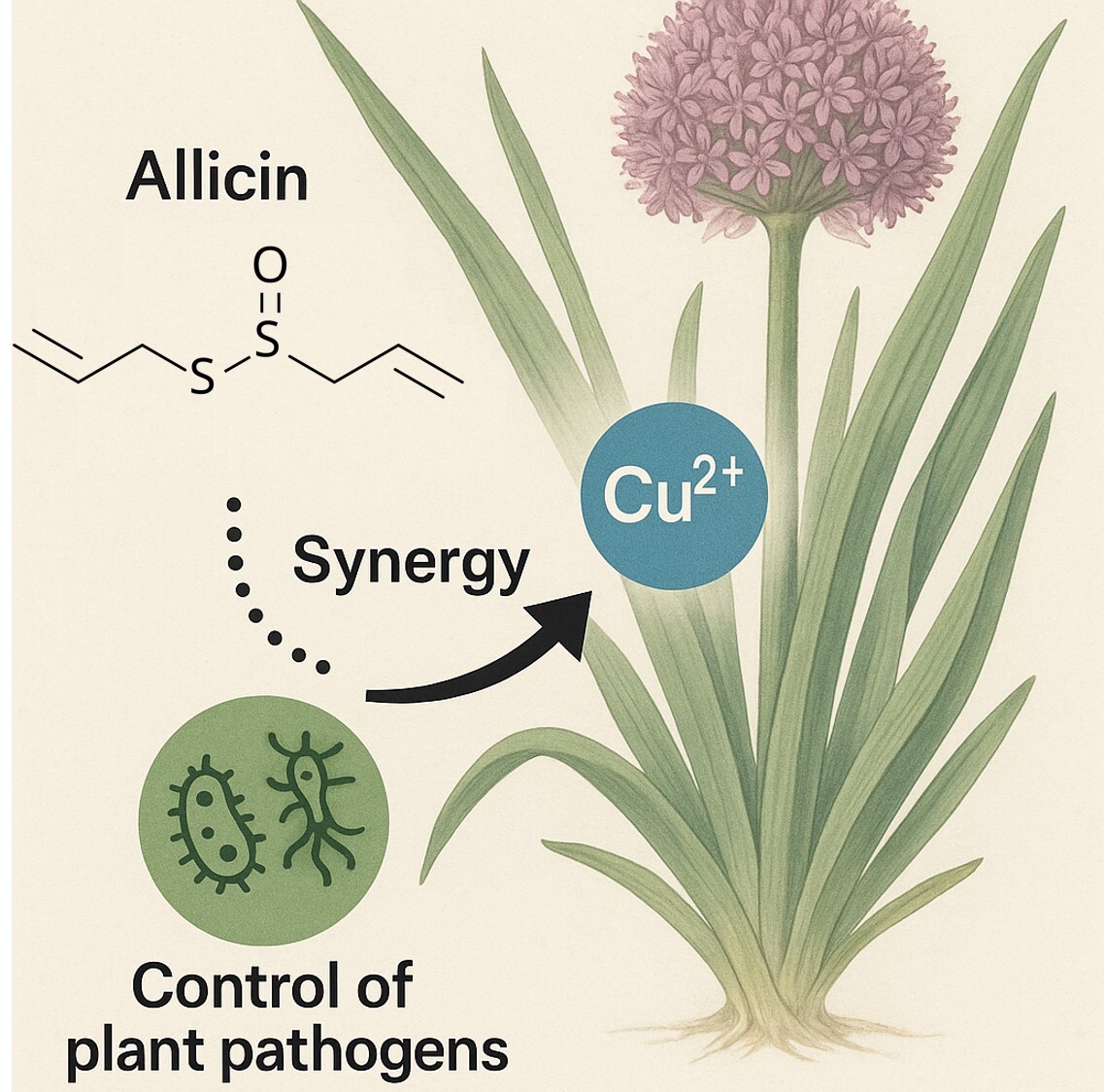
Copper–Allicin Hybrid: A Microbiota-Safe Organic Fertilizer–Pesticide for Sustainable Management of Horticultural Plant Pathogens
1
Department of Horticultural Sciences, Department of Horticultural Sciences, Faculty of Agriculture, Jahrom University, Jahrom, Iran., Alamdare karbala, 7414716135, jahrom, Iran
2
Department of Agricultural Biotechnology, Department of Agricultural Biotechnology, College of Agriculture, Jahrom University, Jahrom, IRAN., Alamdare karbala, 7414716135, jahrom, Iran
These authors had equal contribution to this work
A - Research concept and design; B - Collection and/or assembly of data; C - Data analysis and interpretation; D - Writing the article; E - Critical revision of the article; F - Final approval of article
Submission date: 2025-09-23
Acceptance date: 2026-03-02
Online publication date: 2026-03-16
Corresponding author
Seyed Ali Akbar Bagherian
Department of Horticultural Sciences, Department of Horticultural Sciences, Faculty of Agriculture, Jahrom University, Jahrom, Iran., Alamdare karbala, 7414716135, jahrom, Iran
Department of Horticultural Sciences, Department of Horticultural Sciences, Faculty of Agriculture, Jahrom University, Jahrom, Iran., Alamdare karbala, 7414716135, jahrom, Iran
HIGHLIGHTS
- 1. First report of Cu–allicin complex for dual nutrition and protection
- 2. Inhibits 94.7% bacteria, 100% fungi with 80–90% less copper use
- 3. Cuts citrus canker 97.4% and boosts fruit yield and quality
- 4. Enhances micronutrient uptake with no phytotoxicity at 10× dose
- 5. Soil copper ultra-low, no harm to soil microbes or biodiversity
KEYWORDS
soil microbiotabiopesticideplant disease managementCopper–allicin hybridorganic fertilizer–pesticide
TOPICS
ABSTRACT
The extensive use of synthetic agrochemicals has raised environmental and resistance concerns, underscoring the need for sustainable plant protection. Combining copper with plant-derived antimicrobials offers a promising alternative. Allicin (from garlic) and copper each possess broad-spectrum activity, and their combination may enhance efficacy while reducing toxicity. This study developed and evaluated a novel copper–allicin hybrid organic fertilizer–pesticide, assessing antimicrobial efficacy against major horticultural pathogens, effects on plant growth, yield, soil fertility, and impacts on soil microbial communities compared with conventional inputs. A pH-responsive copper–allicin complex was incorporated into a nutrient-rich compost matrix. In vitro activity against bacterial and fungal pathogens was evaluated using disk diffusion and minimum inhibitory concentration (MIC) assays. Field trials on citrus affected by citrus canker compared foliar application of the hybrid with copper oxychloride and untreated controls. Leaf micronutrients, yield components, soil copper, microbial diversity, and phytotoxicity (lettuce and radish) were measured. The hybrid exhibited broad-spectrum antimicrobial activity and strong synergy. In vitro, it inhibited 94.7% of Xanthomonas isolates and all 23 fungal strains, with MICs of 50–250 mg·l⁻¹, enabling an 80–90% reduction in copper relative to conventional rates. In field trials, it reduced citrus canker lesions by 97.4% (p < 0.01), outperforming copper oxychloride (82.1%). Treated trees showed increased leaf Cu and other micronutrients, resulting in 18.7% more fruit and 12.3% higher Brix (p < 0.01). Soil copper remained very low (≤0.08 ppm), while microbial diversity and plant growth were unaffected. Overall, the compost-based copper–allicin hybrid effectively suppressed phytopathogens, enhanced nutrition and yield, and maintained soil health. Its pH-responsive, slow-release design delivered potent antimicrobial action at substantially reduced copper levels, minimizing environmental toxicity. Superior field performance, improved fruit quality, minimal soil copper accumulation, and preserved soil microbiota confirm its potential as a sustainable, integrated fertilizer–pesticide for horticulture.
CONFLICT OF INTEREST
The authors have declared that no conflict of interests exist.
| eISSN: | 1899-007X |
| ISSN: | 1427-4345 |

We process personal data collected when visiting the website. The function of obtaining information about users and their behavior is carried out by voluntarily entered information in forms and saving cookies in end devices. Data, including cookies, are used to provide services, improve the user experience and to analyze the traffic in accordance with the Privacy policy. Data are also collected and processed by Google Analytics tool (more).
You can change cookies settings in your browser. Restricted use of cookies in the browser configuration may affect some functionalities of the website.
You can change cookies settings in your browser. Restricted use of cookies in the browser configuration may affect some functionalities of the website.
